
Every Facilities Manager knows the risk of relying on outdated security measures in dynamic spaces across Essex and London. The challenge lies in separating genuine threats from false alarms while maintaining strict compliance and asset protection. By embracing professional alarm monitoring backed by certified systems and expert verification protocols, you gain robust defence and peace of mind. This guide clarifies essential technologies, dispels industry myths, and helps you make informed choices for truly effective security management.
Key Takeaways
| Point | Details |
|---|---|
| Alarm Monitoring Enhances Security | Advanced alarm monitoring systems provide proactive protection by detecting, verifying and responding to security threats efficiently. |
| Types of Alarm Systems | Options include Wired, Wireless, and Hybrid systems, each suited to different facility needs and environments. |
| Professional Monitoring Benefits | Continuous surveillance and rapid response capabilities minimise false alarms and ensure effective emergency management. |
| Compliance and Certification are Crucial | Choosing a certified monitoring service ensures adherence to legal standards and enhances system reliability. |
Alarm monitoring defined and dispelled myths
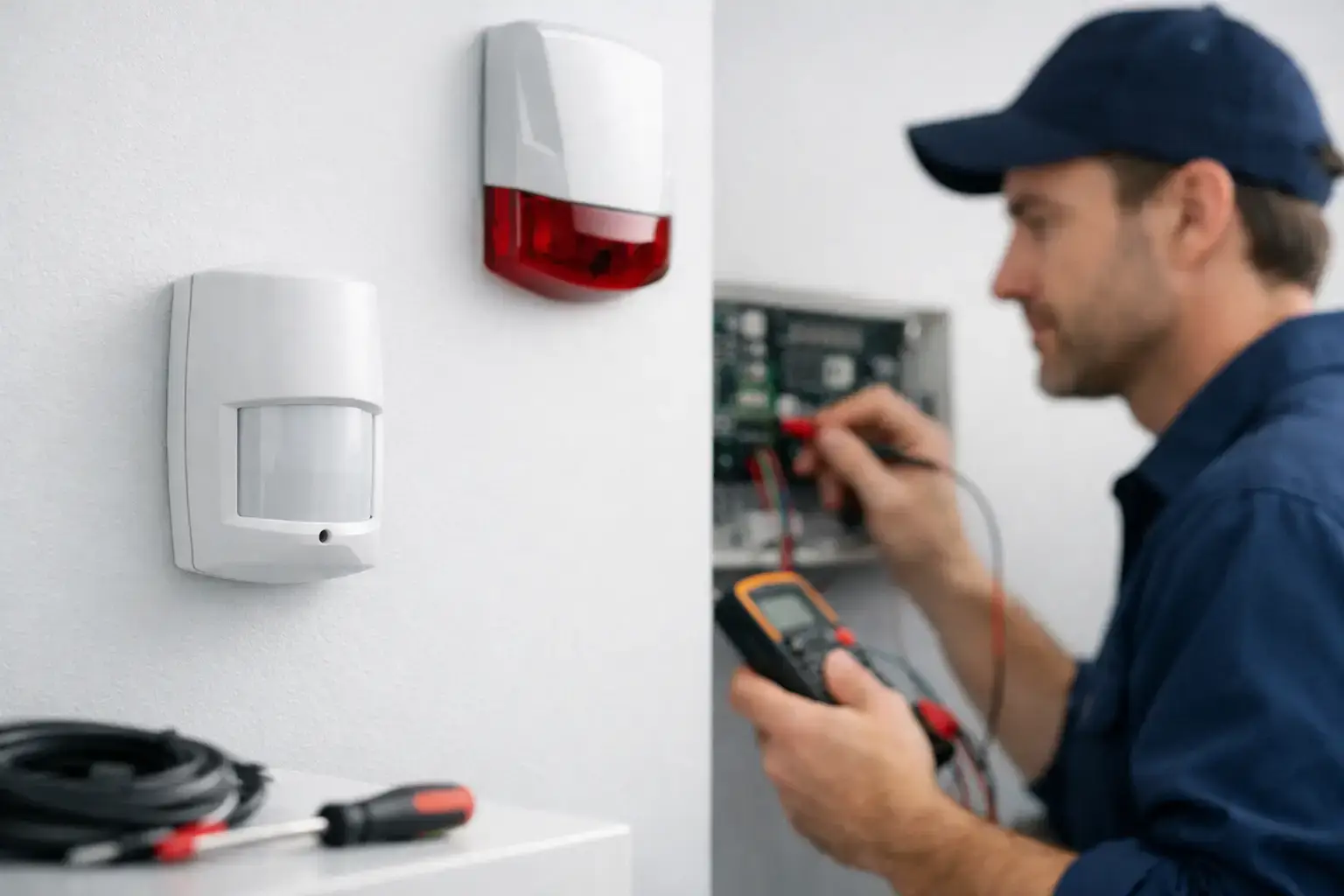
Alarm monitoring represents a sophisticated security technology designed to protect facilities against potential intrusions and emergencies. At its core, an alarm monitoring system transforms basic security alerts into comprehensive safety management, enabling rapid response and proactive protection. Burglar alarm systems go far beyond simple noise-making devices, acting as intelligent guardians for commercial and residential spaces.
The fundamental purpose of alarm monitoring involves detecting, verifying, and responding to potential security breaches. Modern systems like security alarm frameworks integrate multiple components to create a robust defence mechanism:
- Sensor networks that detect unauthorized entry
- Control panels processing sensor information
- Communication channels alerting security personnel
- Real-time monitoring services tracking potential threats
Common myths about alarm monitoring often stem from misunderstandings about system capabilities. Many people believe that alarm systems are straightforward, one-dimensional technologies. However, professional monitoring involves complex, intelligent processes that distinguish between genuine threats and false alarms.
False alarm reduction remains a critical consideration for facilities managers. Professional monitoring services utilise advanced algorithms and verification protocols to minimise unnecessary responses, ensuring that only genuine security incidents trigger full emergency protocols.
Effective alarm monitoring transforms security from reactive to proactive protection strategies.
Pro tip: Regularly review and update your alarm monitoring settings to maintain optimal system performance and responsiveness.
Types of monitored alarm systems available
Modern facilities have access to a diverse range of monitored alarm systems designed to provide comprehensive security protection. Security alarm technologies have evolved significantly, offering sophisticated solutions tailored to specific commercial and residential needs. These systems go beyond traditional noise-making devices, integrating advanced detection and communication technologies.
The primary types of monitored alarm systems include:
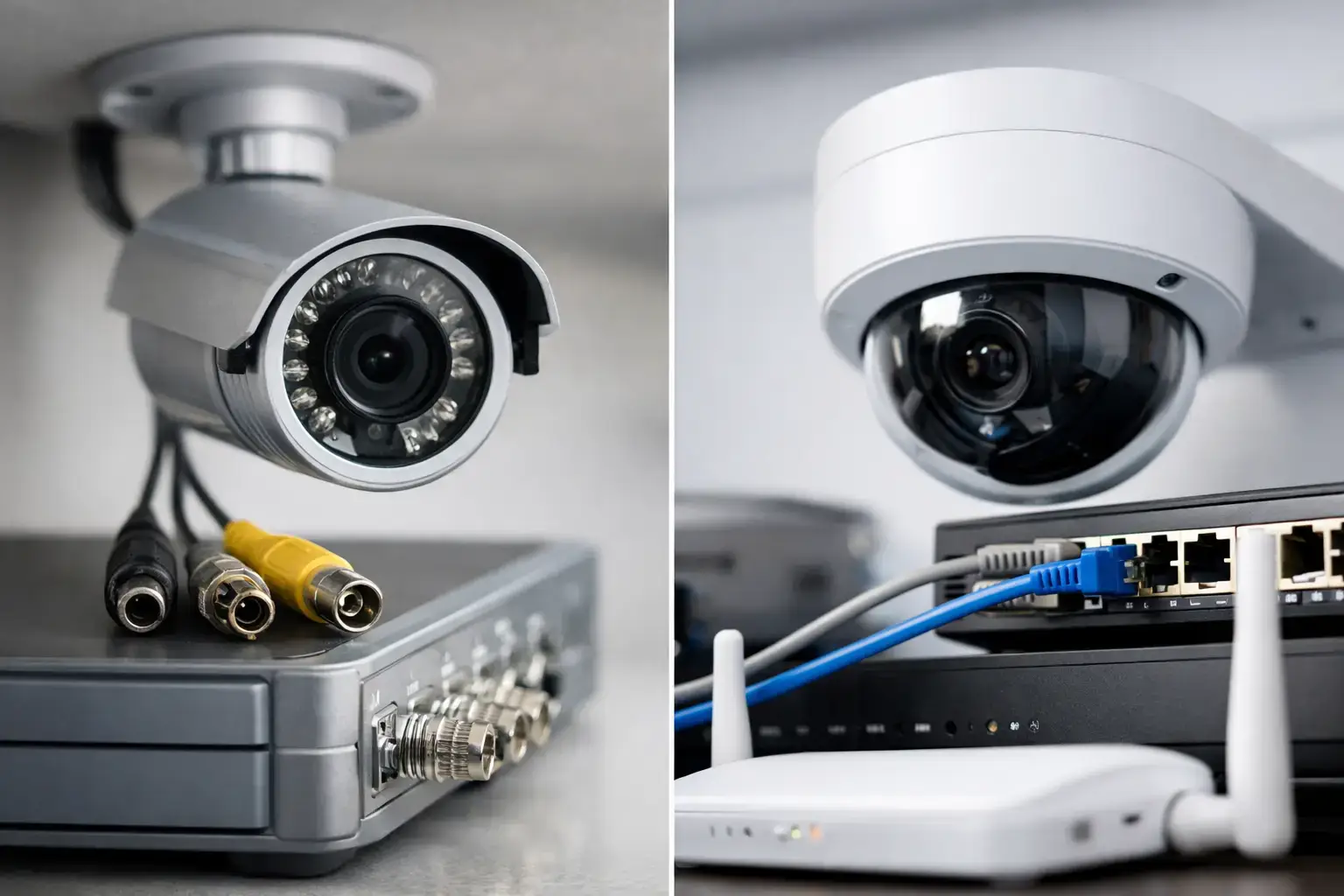
- Wired Alarm Systems
- Hardwired directly into building infrastructure
- More stable and less prone to interference
- Ideal for permanent, established facilities
- Wireless Alarm Systems
- Easy installation with minimal structural disruption
- Flexible placement of sensors and detectors
- Battery-powered components with remote management
- Hybrid Alarm Systems
- Combination of wired and wireless technologies
- Provides maximum flexibility and reliability
- Adaptable to complex facility layouts
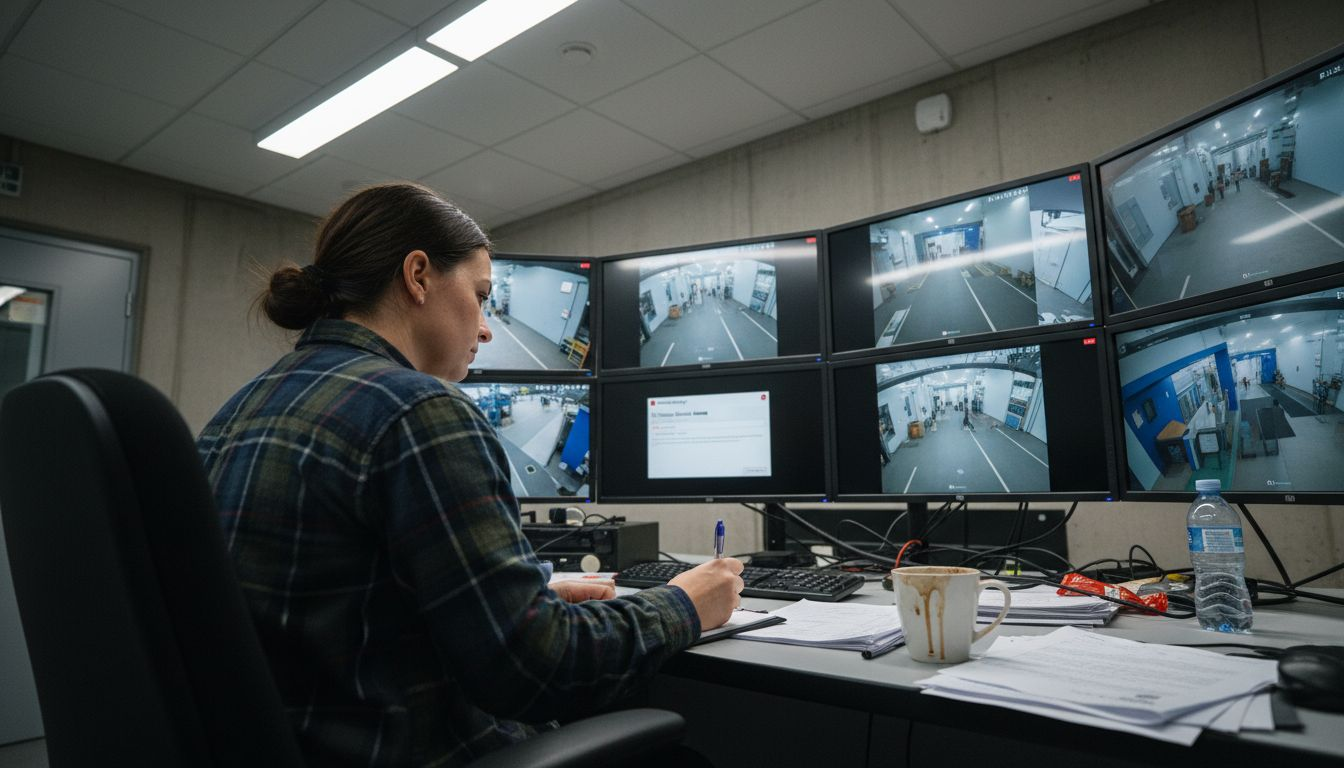
Professional monitoring services enhance these systems by providing continuous surveillance and rapid response capabilities. When an alarm is triggered, these services can quickly verify the threat and contact appropriate emergency services, minimising potential security risks.
Here is a summary of the main types of monitored alarm systems and their ideal applications:
| System Type | Best Suited For | Notable Advantage |
|---|---|---|
| Wired | Permanent large buildings | Stable, low risk of interference |
| Wireless | Rented or older properties | Easy to install and relocate |
| Hybrid | Complex facilities | Combines flexibility and stability |
Effective alarm monitoring transforms passive security infrastructure into proactive protection networks.
Additionally, modern systems offer integrated features like smartphone app controls, real-time notifications, and comprehensive reporting mechanisms. These advanced capabilities enable facilities managers to maintain constant awareness of their security environment.
Pro tip: Consult security professionals to conduct a comprehensive risk assessment before selecting your alarm monitoring system.
How professional monitoring works in the UK
Professional alarm monitoring in the United Kingdom represents a sophisticated security ecosystem designed to provide comprehensive protection for facilities and properties. Alarm monitoring standards ensure that security systems operate with the highest level of reliability and professional oversight, creating a robust defence mechanism against potential security threats.
The professional monitoring process typically involves several key stages:
- Initial Signal Detection
- Advanced sensors trigger alarm system
- Digital communication channels activate
- Immediate transmission to monitoring centre
- Signal Verification
- Trained operators assess alarm authenticity
- Cross-reference multiple sensor inputs
- Determine genuine threat or potential false alarm
- Emergency Response Protocol
- Contact property owners
- Notify appropriate emergency services
- Dispatch security personnel if required
Certified monitoring centres play a crucial role in this process, employing highly trained professionals who understand the nuanced differences between genuine security incidents and potential false alarms. These centres operate with strict protocols, ensuring rapid and appropriate responses to various types of security events.
Professional monitoring transforms passive security systems into active, intelligent protection networks.
Modern monitoring technologies integrate advanced communication protocols, enabling real-time tracking, smartphone notifications, and comprehensive incident reporting. These systems provide facilities managers with unprecedented visibility and control over their security infrastructure.
The following table details how professional monitoring benefits both security and compliance:
| Benefit | Security Impact | Compliance Impact |
|---|---|---|
| 24/7 operator oversight | Faster incident resolution | Meets insurance requirements |
| Signal verification | Reduces false alarms | Supports police response rules |
| Certified monitoring | Trusted staff handle alerts | Satisfies legal standards |
Pro tip: Ensure your chosen monitoring service holds current certification from recognised security industry bodies like SSAIB to guarantee professional standards.
Legal standards, certification and police response
The legal landscape of alarm monitoring in the United Kingdom is governed by a complex framework of police and legal standards designed to ensure comprehensive security and protect individual rights. These regulations establish critical parameters for alarm system design, installation, monitoring, and emergency response protocols.
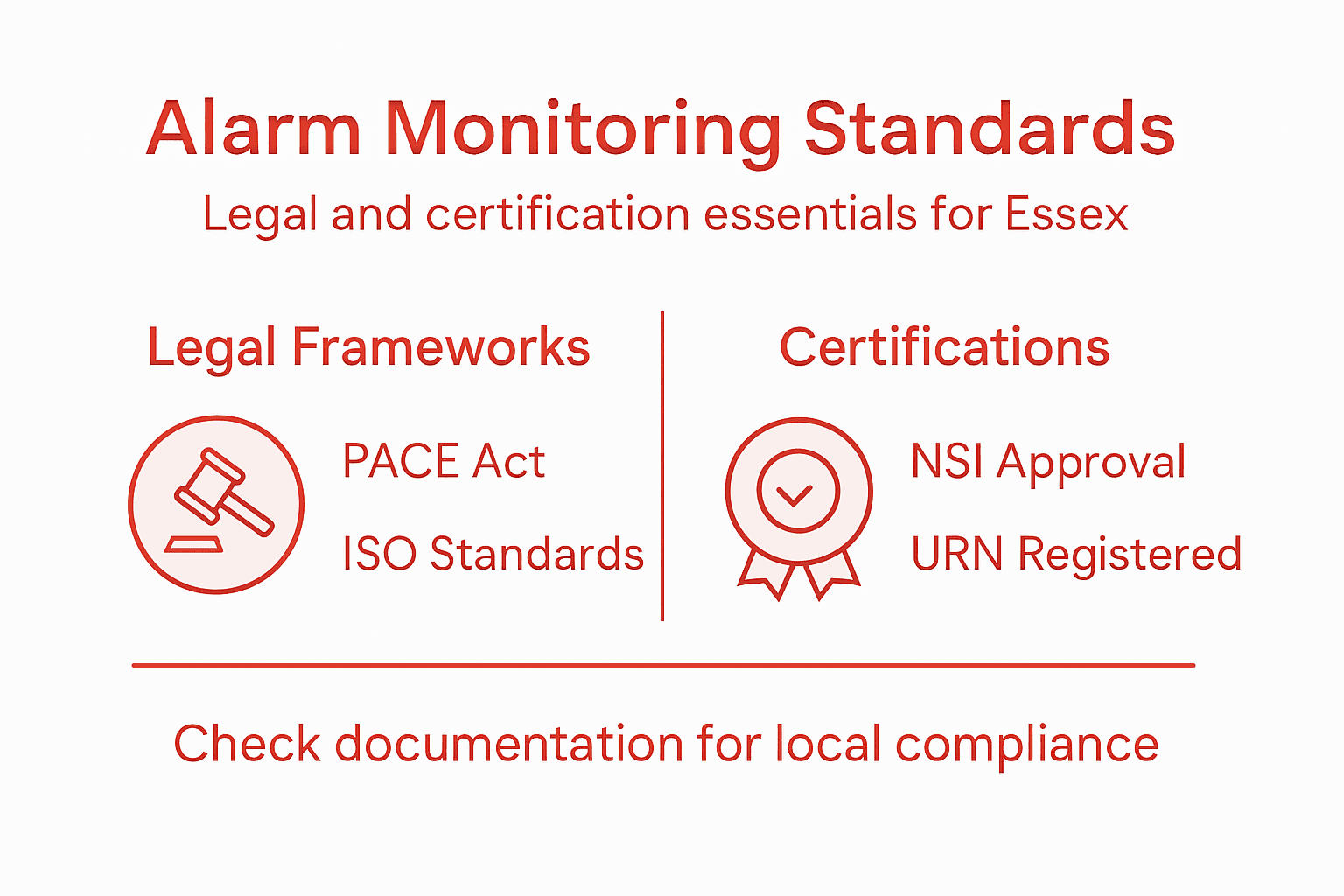
Key legal and certification requirements include:
- Regulatory Compliance
- Police and Criminal Evidence Act (PACE) guidelines
- Home Office approved monitoring standards
- Insurance-mandated certification requirements
- Certification Bodies
- Security Systems and Alarm Inspection Board (SSAIB)
- National Security Inspectorate (NSI)
- Independent third-party accreditation organisations
- Police Response Protocols
- Unique Reference Number (URN) registration
- Verified alarm signal requirements
- Prioritisation of emergency dispatches
Professional monitoring centres must adhere to stringent standards that validate their ability to differentiate between genuine security threats and potential false alarms. These organisations undergo regular audits and assessments to maintain their operational credentials and ensure they meet the highest industry benchmarks.
Legal compliance transforms alarm monitoring from a simple notification system into a robust security management framework.
International standards like ISO frameworks further reinforce the reliability and effectiveness of alarm systems, providing comprehensive guidelines for technology implementation and emergency response strategies across different sectors and facility types.
Pro tip: Request comprehensive documentation of your monitoring service’s legal certifications and URN registration to ensure full compliance and reliable emergency response.
Risks, costs and insurance implications
Alarm monitoring involves a complex interplay of financial considerations and risk management strategies, with significant insurance implications for facilities across Essex and London. Understanding these financial dimensions is crucial for making informed security investments that balance protection with cost-effectiveness.
The primary cost and risk factors include:
- Initial Investment Costs
- Professional system installation
- Hardware and sensor equipment
- Software and communication infrastructure
- Ongoing Operational Expenses
- Monthly monitoring service fees
- Regular system maintenance
- Software updates and upgrades
- Potential Financial Risks
- False alarm penalties
- Potential insurance premium increases
- Security breach liability
Insurance providers typically assess alarm systems as critical risk mitigation tools. Professionally monitored systems with verified compliance can lead to substantial premium reductions, often ranging between 10-20% depending on the comprehensiveness of the security infrastructure.
Effective alarm monitoring transforms risk management from reactive expense to proactive investment.
The financial landscape of security systems extends beyond direct costs, incorporating long-term risk reduction strategies that protect businesses against potential substantial losses from theft, property damage, or operational disruption.
Pro tip: Request a comprehensive cost-benefit analysis from your security provider to understand the potential insurance and risk management savings.
Choosing the right alarm monitoring provider
Selecting an appropriate alarm monitoring provider requires careful evaluation of multiple critical factors that extend far beyond basic service offerings. Comprehensive security provider selection involves understanding the nuanced requirements of professional monitoring services tailored to Essex and London facilities.
Key considerations when evaluating potential alarm monitoring providers include:
- Technical Capabilities
- Number of redundant monitoring centres
- Advanced signal verification technologies
- Real-time communication infrastructure
- Compliance and Certification
- SSAIB and NSI approved credentials
- Industry standard compliance
- Regular third-party auditing processes
- Service Level Considerations
- Response time guarantees
- 24/7 professional monitoring
- Comprehensive customer support channels
Professional monitoring providers distinguish themselves through sophisticated technologies that transform basic alarm systems into intelligent security networks. These advanced systems integrate multiple communication channels, ensuring rapid and accurate threat assessment with minimal false alarm incidents.
The right monitoring provider acts as an extension of your facility’s security team, offering proactive protection beyond simple alarm triggering.
Beyond technical specifications, facilities managers should assess a provider’s reputation, track record, and ability to offer bespoke solutions that align with specific security requirements. Flexible contract terms, transparent pricing, and comprehensive reporting mechanisms are additional critical evaluation criteria.
Pro tip: Request detailed performance metrics and independent certification documentation before committing to any alarm monitoring service.
Secure Your Essex Facility with Expert Alarm Monitoring Solutions
Understanding the complexities of alarm monitoring and meeting strict legal compliance can feel overwhelming for facilities managers in Essex. Key challenges highlighted in the article include reducing false alarms, ensuring professional monitoring by certified providers, and aligning with police response protocols. If you seek to transform your security system into a reliable, proactive defence network that follows verified alarm signal standards and reduces insurance risks then expert support is essential.
At 247 Security, we specialise in installing compliant burglar alarms and monitoring systems tailored for both business and residential properties in Essex. Our comprehensive solutions integrate wired, wireless and hybrid systems combined with professional monitoring services meeting SSAIB and NSI certifications. We help you maintain full legal compliance while delivering rapid verification and emergency response to protect your property and peace of mind.
Explore how our alarm installation services can upgrade your security infrastructure today.

Don’t leave your facility vulnerable to costly false alarms or insurance hurdles. Contact 247 Security now for a personalised consultation and benefit from compliant, intelligent alarm monitoring that works for you in Essex and beyond.
Frequently Asked Questions
What are the main types of monitored alarm systems?
The primary types of monitored alarm systems include wired systems, which are hardwired into the building and offer stability; wireless systems, which provide easy installation and flexibility; and hybrid systems that combine both technologies for enhanced adaptability.
How does professional alarm monitoring work?
Professional alarm monitoring involves several stages: the alarm system detects a signal, trained operators verify the alarm’s authenticity by assessing sensor inputs, and a response protocol is initiated if a genuine threat is verified, including notifying property owners and emergency services.
What legal standards do alarm monitoring services need to comply with?
Alarm monitoring services must adhere to regulatory frameworks like the Police and Criminal Evidence Act (PACE) and obtain certifications from recognised bodies such as the Security Systems and Alarm Inspection Board (SSAIB) to ensure reliable and compliant monitoring practices.
How can I choose the right alarm monitoring provider?
To choose the right alarm monitoring provider, evaluate their technical capabilities, compliance and certification, and service level considerations, including response time guarantees and customer support. It’s also essential to check their reputation and service track record.
Recommended
- Expert Fire Alarm Maintenance Services | 247 CCTV Security Ltd
- Expert Fire Alarm Maintenance Services | 247 CCTV Security Ltd
- CCTV Regulations in Essex: Essential Guide – 247 CCTV Security Ltd
- Alarm Response Services – Protecting Essex and London – 247 CCTV Security Ltd
- Perché Monitorare i Rischi Cyber: Guida Essenziale – Security Hub