Security managers across Essex and London face a persistent challenge: even with CCTV systems installed, blind spots and compliance gaps leave properties vulnerable. Poor camera placement not only fails to deter crime but can also trigger legal penalties under UK data protection laws. This guide walks you through a proven workflow that balances legal compliance with effective coverage, helping you reduce security incidents by up to 25% within six months while avoiding costly fines.
Key Takeaways
| Point | Details |
|---|---|
| Legal compliance first | UK Data Protection Act and ICO registration are mandatory before installing CCTV that captures identifiable individuals. |
| Strategic positioning | Cover all entry points and blind spots with cameras mounted 2.5 to 3 meters high for optimal deterrence and footage quality. |
| Transparent communication | Clear signage and policies maintain legal obligations and build trust with tenants and staff. |
| Avoid common errors | Poor angles, low mounting, and privacy breaches reduce system effectiveness and risk legal penalties. |
| Measurable results | Proper placement can cut security incidents by 25% within six months through comprehensive coverage. |
Prerequisites and Legal Compliance for CCTV Installation
Before positioning a single camera, you must understand the legal framework governing CCTV in the UK. CCTV installation must comply with the Data Protection Act 2018 and UK GDPR, requiring necessity, proportionality, transparency, and data protection registration.
If your system captures identifiable individuals, register with the Information Commissioner’s Office. Annual fees range from £52 to £78 for small to medium enterprises. Registration demonstrates accountability and protects your organization from penalties that can reach thousands of pounds.
Understanding UK CCTV laws and privacy implications forms the foundation of any compliant installation. You cannot install cameras in privacy sensitive areas such as toilets, changing rooms, or private office spaces unless exceptional circumstances exist with clear justification.
Key compliance steps include:
- Conduct a privacy impact assessment before installation
- Document legitimate business purposes for surveillance
- Establish data retention policies aligned with necessity principles
- Ensure camera angles avoid capturing neighboring properties unnecessarily
- Maintain records of all compliance decisions and registrations
Pro Tip: Document every compliance measure before installation begins. This creates an audit trail that demonstrates due diligence if questions arise later. Many facilities managers discover gaps only after receiving complaints or ICO inquiries, making retrospective compliance far more complex and expensive.
Familiarize yourself with CCTV Regulations in Essex to understand local requirements that may affect your installation. The UK ICO CCTV compliance guidelines provide detailed requirements for lawful surveillance operations.
Core Steps in the CCTV Placement Workflow
With legal prerequisites addressed, you can now implement a systematic placement workflow that maximizes coverage while maintaining compliance.
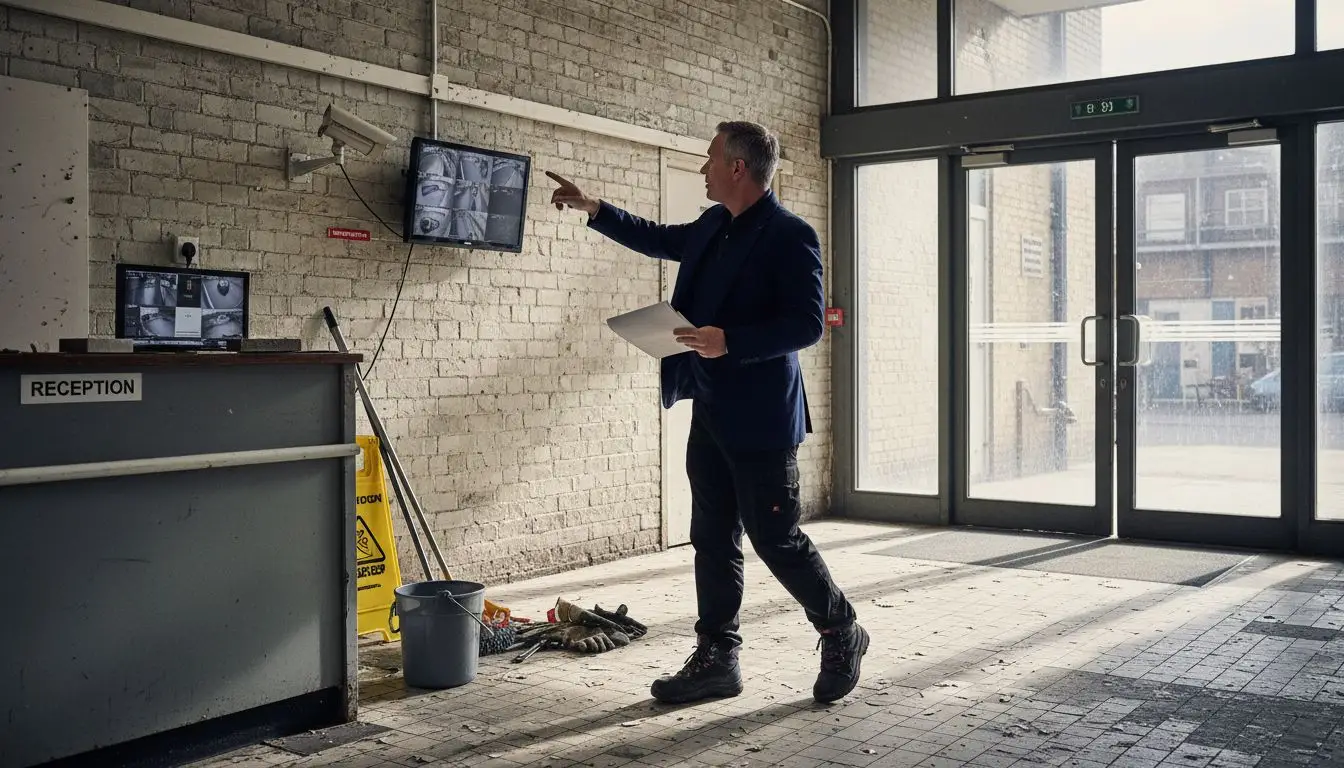
Conduct a comprehensive site assessment. Walk through your entire property identifying all entrances, exits, high traffic zones, and vulnerable areas. Note locations where incidents have occurred previously or where assets require protection. Map blind spots where current visibility is limited.
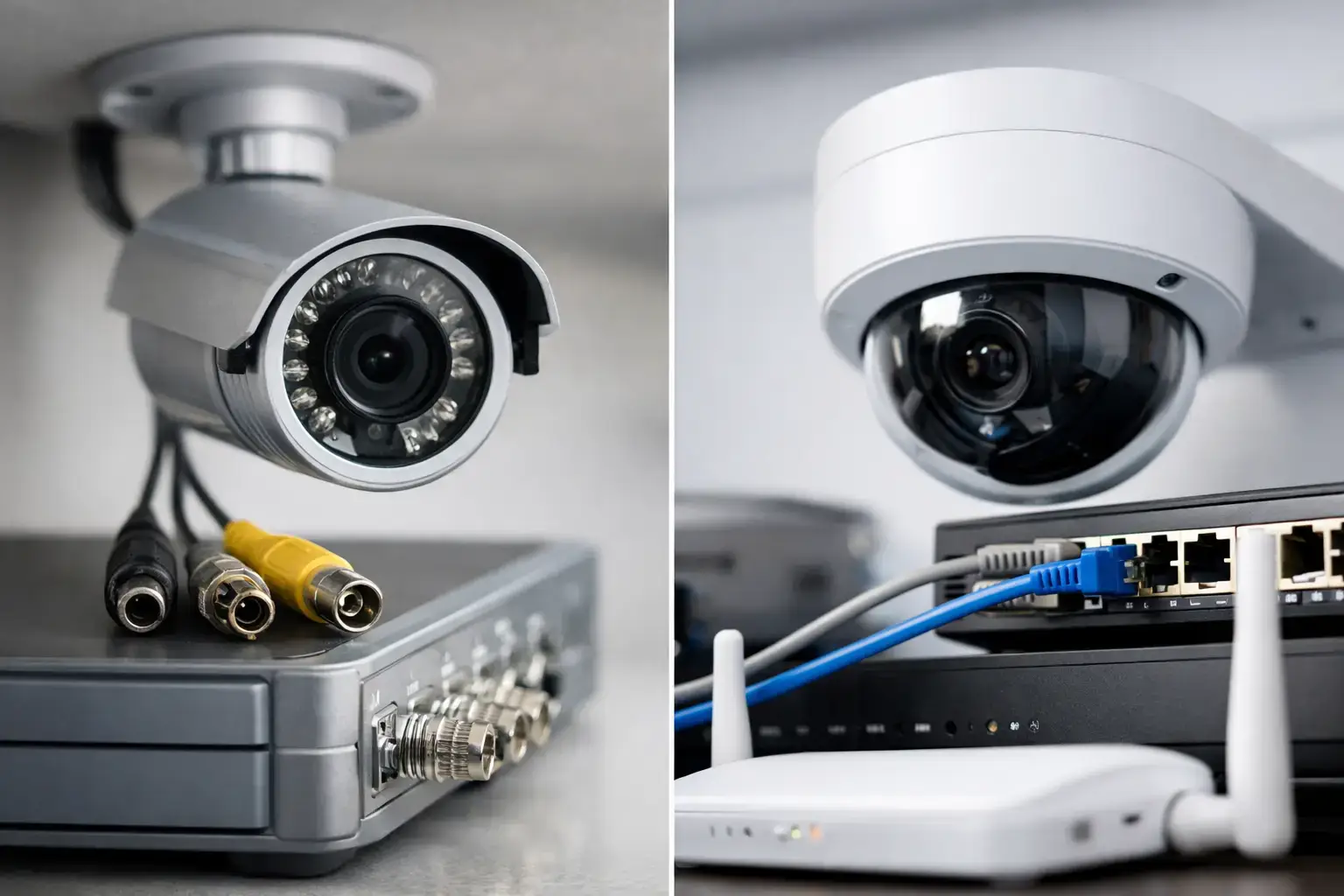
Select appropriate camera types for each location. Fixed cameras work well for consistent monitoring of specific areas. PTZ cameras provide flexible coverage across wider zones. Portable units suit temporary installations or sites with changing layouts.
Position cameras strategically at all access points. Every entrance and exit should have camera coverage capturing facial features and identifying characteristics. Overlap fields of view between cameras to eliminate gaps where intruders could move undetected.
Mount cameras at optimal heights. Strategic placement at 2.5 to 3 meters ensures effective coverage and tamper resistance. This height balances accessibility for maintenance with protection from vandalism while capturing clear facial images and license plates.
Optimize camera angles and positioning. Poor angles and mounting height reduce footage quality and diminish system efficiency. Test each camera view during installation to verify it captures usable footage without glare, obstructions, or excessive backlight.
Leverage visibility for deterrence. Visible cameras discourage criminal activity more effectively than hidden units in most commercial settings. Strategic placement sends a clear message that surveillance is active.
Plan for future flexibility and maintenance. Ensure cameras remain accessible for cleaning, adjustment, and repairs. Consider how site layout changes might affect coverage and plan expansion points.
| Camera Type | Coverage Area | Flexibility | Cost | Best Use Case |
|---|---|---|---|---|
| Fixed | Specific zone | Low | £ | Entrances, specific monitoring points |
| PTZ | Wide area with zoom | High | £££ | Large open spaces, parking lots |
| Portable | Temporary zones | Very High | ££ | Construction sites, event spaces |
Pro Tip: Use coverage planning software or simple floor plans with camera field of view overlays before installing hardware. Test camera positions with temporary mounts to verify angles capture what you expect. This prevents costly repositioning after permanent installation.
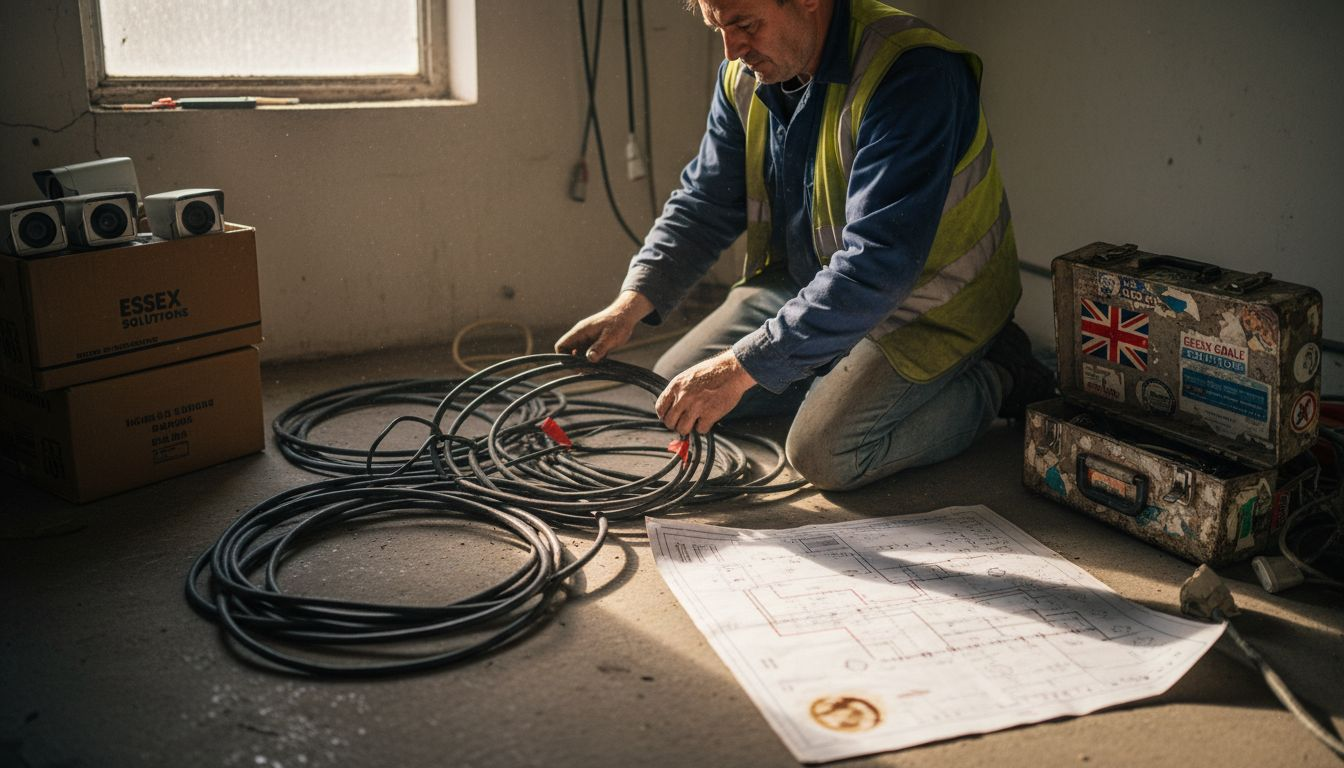
When wiring your CCTV system, plan cable routes that allow future expansion. Reference our CCTV camera maintenance guide to ensure installation positions support ongoing upkeep. Consider remote viewing setup requirements during initial placement to verify network connectivity at each camera location.
Follow best CCTV placement practices and review detailed CCTV installation position guidance for technical specifications on mounting and angles.
Communication and Compliance Transparency
Effective CCTV placement extends beyond cameras to encompass clear communication with everyone who enters your monitored spaces. Transparency builds trust and satisfies legal requirements simultaneously.
Install prominent signage at all monitored entry points. Signs must clearly indicate that CCTV surveillance is in operation. This notification fulfills your legal obligation to inform individuals that recording is taking place and provides contact information for data protection queries.
Develop comprehensive CCTV usage policies that document:
- Specific purposes for surveillance operations
- Data handling procedures and access controls
- Retention periods and deletion schedules
- Individual rights regarding recorded footage
- Procedures for responding to subject access requests
Distribute these policies to all staff members and make them available to tenants or visitors upon request. Conduct briefings explaining the CCTV system’s purpose, scope, and limitations. This proactive communication prevents misunderstandings and demonstrates your commitment to responsible surveillance.
Schedule regular compliance audits reviewing signage visibility, policy adherence, and data protection practices. Document audit findings and corrective actions taken. This ongoing verification ensures your system remains compliant as regulations evolve and site conditions change.
Maintain detailed records of all communication efforts including:
- Staff training sessions and attendance
- Policy distribution confirmations
- Signage installation locations and dates
- Audit reports and remediation actions
These records provide evidence of compliance should questions or complaints arise. They demonstrate that you operate your CCTV system responsibly and transparently, which regulators and courts view favorably. For ongoing technical issues, reference our CCTV troubleshooting guide to maintain system reliability.
Common Mistakes and Troubleshooting in CCTV Placement
Even experienced security managers encounter placement challenges that compromise system effectiveness. Recognizing these errors early allows swift correction before incidents occur.
Ignoring blind spots increases undetected incident risks by up to 30%. Conduct thorough site walkthroughs after installation, deliberately trying to identify routes someone could take without appearing on camera. Use coverage mapping tools to visualize camera fields of view and identify gaps requiring additional units or repositioning.
Low mounting invites tampering and vandalism. Cameras positioned below 2.5 meters become easy targets for spray paint, physical damage, or repositioning. Mount cameras high enough to deter interference while maintaining image quality for identification purposes.
Privacy breaches from monitoring sensitive areas create legal liability. Avoid placing cameras in toilets or changing rooms unless exceptional circumstances exist with clear signage and justification. Even then, consult legal counsel before proceeding as the threshold for legitimate surveillance in these areas is extremely high.
Poor footage quality renders cameras ineffective despite proper positioning. Common causes include:
- Direct sunlight creating glare or silhouettes
- Obstructions from trees, signs, or building features
- Insufficient lighting in monitored areas
- Dirty or damaged camera lenses
- Incorrect focus or zoom settings
Troubleshooting placement errors systematically:
- Review recorded footage from each camera at different times of day
- Identify image quality issues or coverage gaps
- Test alternative angles or positions addressing identified problems
- Document changes made and verify improvements
- Schedule regular reviews to catch emerging issues early
Compliance reminders to prevent violations:
- Never monitor private spaces without exceptional justification
- Ensure all signage remains visible and legible
- Limit camera angles to necessary coverage areas only
- Review data retention schedules and delete footage appropriately
- Update privacy impact assessments when changing camera positions
Our comprehensive CCTV troubleshooting guide addresses technical issues beyond placement. The NPSA CCTV workplace report provides additional context on common workplace surveillance challenges.
Alternative Approaches and Tradeoffs in CCTV Placement
Not every site suits a fixed camera installation. Understanding alternative approaches helps you match surveillance solutions to specific operational needs and constraints.
Portable CCTV units offer flexibility for sites with changing layouts such as construction areas, temporary events, or seasonal operations. These systems deploy quickly and redeploy as needs shift. However, they require more frequent positioning reviews and may lack the weatherproofing or tamper resistance of permanent installations.
PTZ cameras provide wide area coverage with pan, tilt, and zoom capabilities controlled remotely. A single PTZ camera can monitor zones requiring multiple fixed cameras. This reduces hardware costs but increases complexity. PTZ systems need operator attention or sophisticated automation to effectively cover their potential monitoring area, making them less suitable for facilities with limited security staffing.
Fixed cameras deliver reliable, cost effective coverage for specific zones. They require minimal ongoing adjustment and operate independently. Their limitation lies in inflexibility. Site changes may render fixed cameras less effective, requiring repositioning or additional units.
Privacy masks enable cameras to monitor public areas while blocking views of sensitive zones. Modern systems allow digital masking of specific image regions, balancing comprehensive coverage with privacy protection. This proves valuable when cameras must be positioned where they unavoidably see private spaces at the edge of their field of view.
| Approach | Advantages | Disadvantages | Typical Use Case |
|---|---|---|---|
| Fixed Cameras | Cost effective, reliable, minimal maintenance | Inflexible, site changes reduce effectiveness | Permanent facilities with stable layouts |
| PTZ Cameras | Wide coverage, flexible monitoring, fewer units needed | Higher cost, requires operator input or automation | Large open areas, active security operations |
| Portable Units | Rapid deployment, relocatable, adapts to changes | Less weather resistant, requires frequent review | Construction sites, temporary events |
Tradeoffs between visibility and discretion require careful consideration. Visible cameras deter crime effectively but may prompt privacy concerns or create an institutional atmosphere. Discreet cameras maintain aesthetics but sacrifice deterrent value. Most commercial installations benefit from visible deterrent cameras at entry points combined with more discreet units covering sensitive areas.
Balancing coverage comprehensiveness with privacy protection prevents legal issues. Angle cameras to capture necessary monitoring zones while avoiding unnecessary surveillance of private spaces or neighboring properties. This careful positioning demonstrates proportionality and respects individual privacy rights.
Expected Results and Outcomes of Effective CCTV Placement
Following this systematic workflow produces measurable security improvements and compliance confidence. Setting realistic expectations helps you evaluate system performance and justify security investments.
Proper CCTV placement can reduce security incidents by 25% within six months by increasing deterrence and coverage. This reduction stems from both deterrent effects and improved incident response enabled by comprehensive footage.
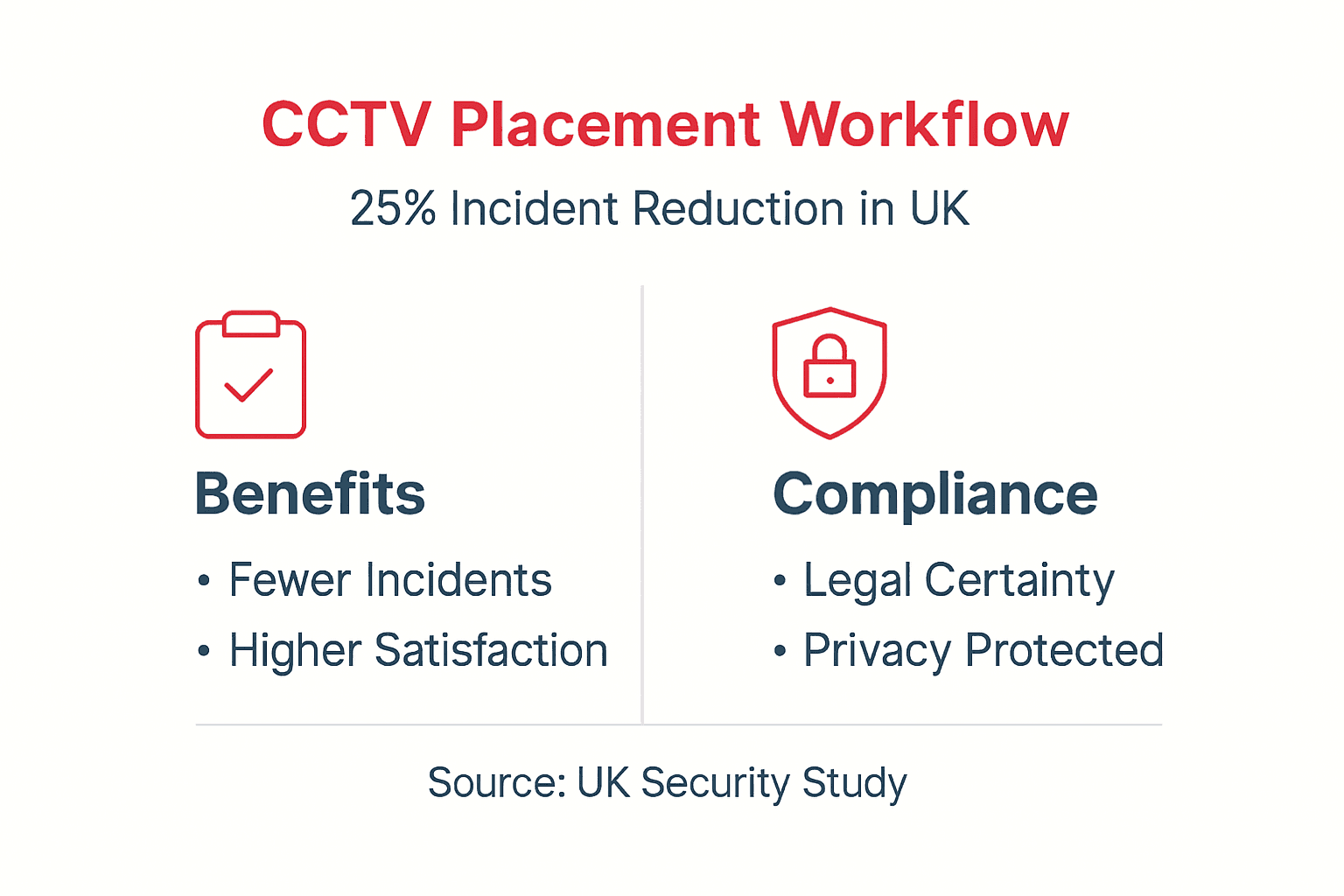
Tenant and employee satisfaction improves when visible, effective coverage creates perception of enhanced safety. People feel more secure knowing surveillance protects common areas and entry points. This psychological benefit complements the direct security improvements cameras provide.
Compliance related complaints drop to near zero when you maintain proper signage, respect privacy boundaries, and handle data responsibly. Transparent communication about surveillance purposes and scope prevents misunderstandings that generate privacy concerns.
Cost savings emerge from optimized camera placement requiring fewer units to achieve comprehensive coverage. Preventing incidents through deterrence costs far less than responding to theft, vandalism, or safety events. Insurance premiums may decrease when insurers recognize your proactive security measures.
Expect a 25% reduction in security incidents within six months of implementing comprehensive CCTV coverage following this placement workflow.
Monitor these success indicators post installation:
- Documented security incidents per month compared to pre installation baseline
- Response times to security events using CCTV footage
- Number of privacy complaints or compliance inquiries received
- Percentage of incidents where footage provided useful evidence
- Staff and tenant satisfaction scores regarding facility safety
Review footage regularly to verify cameras continue capturing effective coverage as lighting conditions change seasonally or site layouts evolve. Schedule quarterly reviews of camera positioning and annual comprehensive audits of your entire surveillance system. Reference security incident reduction statistics to benchmark your results against industry standards.
Enhance Your Security with Expert CCTV Solutions in Essex and London
Implementing this workflow requires careful planning, technical expertise, and ongoing compliance management. Our team specializes in CCTV leasing in Essex and London, providing flexible solutions that adapt to your facility’s needs without large capital investments.

We deliver professional CCTV installation services ensuring optimal placement from day one. Our experts conduct thorough site assessments, recommend appropriate camera types, and position systems for maximum coverage while maintaining legal compliance. When technical issues arise, our CCTV troubleshooting guide and support team ensure your system remains operational and effective.
Frequently Asked Questions About CCTV Placement Workflow
What are the key legal requirements for CCTV installation in the UK?
You must comply with the Data Protection Act 2018 and UK GDPR, register with the ICO if capturing identifiable individuals, install clear signage, and avoid monitoring private spaces. Data retention policies and legitimate purposes must be documented.
How often should I review and adjust CCTV camera positions?
Conduct quarterly reviews of footage quality and coverage, with comprehensive annual audits of the entire system. Review immediately after any site layout changes, lighting modifications, or security incidents revealing coverage gaps.
Can I install cameras covering private areas like changing rooms?
Generally no. Only exceptional circumstances with clear legal justification, prominent signage, and legal counsel approval permit surveillance of private spaces. The threshold for legitimate monitoring in these areas is extremely high.
What types of cameras are best for large, evolving sites?
Portable CCTV units or PTZ cameras offer flexibility for sites with changing layouts. Portable systems redeploy easily while PTZ cameras cover wide areas with remote control, though both require more active management than fixed installations.
How do I verify that my CCTV covers all blind spots effectively?
Conduct physical walkthroughs deliberately trying to avoid camera detection. Use coverage mapping tools to visualize camera fields of view. Review footage from different times of day checking for gaps, obstructions, or quality issues requiring adjustment.